
Forests are often described as the 'lungs of the planet.' But their importance goes far beyond the air we breathe. An in-depth analysis of India's forest data, ISFR 2023 findings, ecosystem functions, water security, and true conservation strategies.
In This Article (11 Sections)▼
- India’s Forests: What Does the Data Tell Us?
- A Forest Is an Ecosystem, Not a Collection of Trees
- Forests Are Homes for Wildlife
- Forests and Water Are Closely Connected
- Forests and Climate Change
- The Hidden Cost of Forest Loss
- Forests and People
- Protecting Existing Forests Comes First
- What Forest Conservation Really Means
- A Forest Worth Protecting
- Sources & Further Reading
Forests are often described as the “lungs of the planet.” But their importance goes far beyond the air we breathe.
A forest is a living system—made up of trees, plants, fungi, insects, birds, mammals, microorganisms, soil, water and people. These elements interact continuously to regulate ecosystems, support biodiversity, store carbon and sustain livelihoods.
For India, forests are particularly important. They stretch from the Himalayan landscapes to the Western Ghats, from the forests of Central India to the mangroves of the coast. Each region supports different species, ecological processes and communities.
India’s Forests: What Does the Data Tell Us?
According to the India State of Forest Report (ISFR) 2023, India has approximately 715,343 square kilometres of forest cover, equivalent to 21.76% of the country's geographical area.
When tree cover outside forests is included, India's total forest and tree cover reaches approximately 827,357 square kilometres, or 25.17% of the country's geographical area.
This distinction matters.
Forest cover refers to land meeting the Forest Survey of India's definition of forest cover, while tree cover also includes smaller patches of trees outside forests. A rise in tree cover therefore should not automatically be interpreted as an increase in the extent or ecological quality of natural forests.
The ISFR 2023 recorded an increase of 1,445 square kilometres in India's combined forest and tree cover compared with 2021.
These figures are encouraging, but they should be understood alongside another question: Are we protecting and restoring healthy, functioning forests—not simply increasing the number of trees?
A Forest Is an Ecosystem, Not a Collection of Trees
A plantation and a natural forest may both contain trees, but they are not ecologically equivalent.
Natural forests contain layers of vegetation, different tree species, old and young trees, fallen wood, leaf litter, fungi, insects, birds and mammals. These relationships create a functioning ecosystem.
A monoculture plantation, by contrast, may have many trees but considerably less structural and biological diversity.
This is why forest conservation cannot be measured only by counting trees. The real goal should be to maintain healthy, connected and resilient ecosystems.
Forests Are Homes for Wildlife
India is one of the world's biologically diverse countries, and forests provide habitat for an extraordinary range of wildlife.
Tigers, leopards, elephants, sloth bears, primates, deer, birds, reptiles, amphibians and countless insects depend on forest ecosystems.
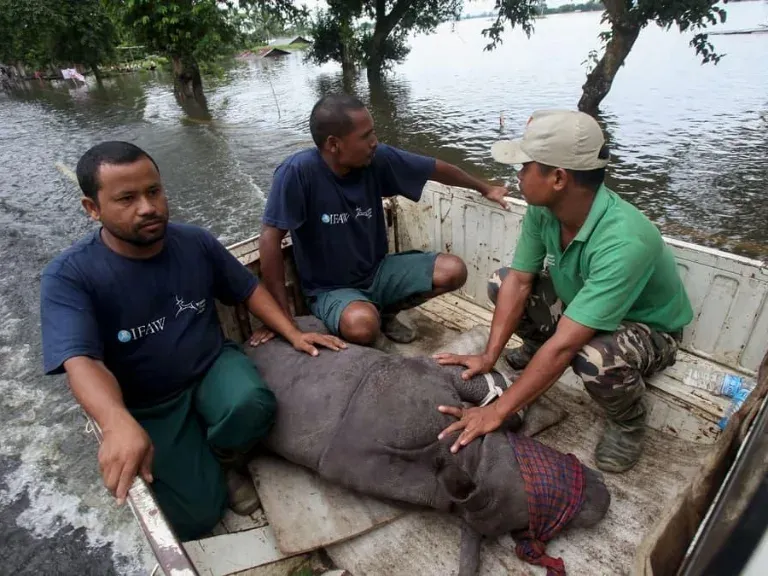
But wildlife does not live according to administrative boundaries. When forests become fragmented by roads, agriculture, mining, settlements or other infrastructure, populations can become isolated. Fragmentation can reduce access to food and breeding areas and increase encounters between people and wildlife.
Protecting individual animals is therefore only one part of conservation. Protecting the ecosystems and corridors they depend on is equally important.
Forests and Water Are Closely Connected
Forests influence the movement and storage of water through landscapes. Vegetation and forest soils can help intercept rainfall, reduce surface runoff and erosion, and support infiltration. Forested watersheds can therefore play an important role in maintaining water systems.
When forests are degraded, soil can become more vulnerable to erosion and the ability of landscapes to retain and regulate water can change. This means forest conservation is not only a wildlife issue. It is also connected to water security, agriculture and human well-being.
Forests and Climate Change
Forests are important components of the global carbon cycle because growing vegetation absorbs carbon dioxide and stores carbon in biomass and soils.
India's ISFR 2023 estimated the country's forest carbon stock at approximately 7,285.5 million tonnes, an increase of 81.5 million tonnes compared with the previous assessment.
Globally, forests also remain an important carbon sink. The FAO's 2025 Global Forest Resources Assessment reported that forests were a net carbon sink during 2021–2025, although emissions associated with forest conversion continue to offset part of that benefit.
But forests should not be viewed only as carbon-storage systems. A forest that stores carbon but loses its native species, ecological functions or connectivity is still experiencing ecological degradation. Climate action and biodiversity conservation need to work together.
The Hidden Cost of Forest Loss
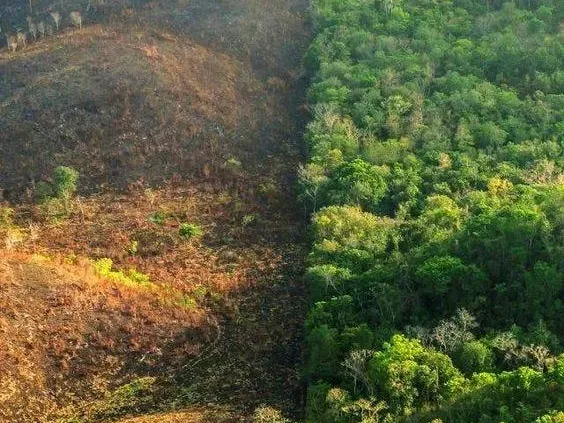
Forest loss is not always as obvious as a completely cleared landscape. Forests can also be degraded gradually through repeated fires, fragmentation, unsustainable extraction, invasive species, infrastructure development and other pressures.
Global Forest Watch's monitoring data makes an important distinction between tree-cover loss and permanent deforestation. Tree-cover loss can result from human activities, fires or other disturbances and may sometimes be temporary. Deforestation generally refers to the permanent conversion of forest to another land use.
This distinction is important when interpreting forest statistics. A satellite image can tell us that tree cover has changed. Understanding why it changed, whether the forest will recover, and what happened to biodiversity and local communities requires deeper investigation.
Forests and People
Millions of people depend directly or indirectly on forests for food, fuel, fodder, medicine, materials, livelihoods and cultural practices.
Forest conservation therefore cannot be separated from the people who live with and depend upon these ecosystems. Effective conservation needs to consider both ecological health and human well-being. Local knowledge can also provide valuable understanding of species, seasonal changes, forest resources and landscape management.
The question should not simply be: 'How many trees can we plant?' It should also be: 'How can we protect the forests that already exist, restore degraded ecosystems and ensure that people and wildlife can continue to thrive?'
Protecting Existing Forests Comes First
Planting trees can have value, particularly when native species are used appropriately and restoration is based on the needs of the landscape. But planting trees cannot always compensate for the loss of an established natural forest.
A mature forest may contain complex ecological relationships that take decades—or much longer—to develop. That is why conservation efforts should prioritize:
What Forest Conservation Really Means
Forest conservation is not simply about keeping land green. It means protecting living ecosystems. It means understanding that an old-growth forest, a wildlife corridor, a watershed and a community dependent on forest resources are all connected.
India's forest statistics show important progress in overall forest and tree cover, but numbers alone cannot tell the entire story of forest health. The next step is to look beyond area and ask deeper questions about forest quality, biodiversity, connectivity, ecological function and resilience.
"Because the future of a forest is not determined by how many trees stand on a map. It is determined by whether the forest ecosystem itself continues to live."
A Forest Worth Protecting
Every forest is more than a collection of trees. It is habitat. It is water infrastructure. It is carbon storage. It is soil protection. It is biodiversity. It is livelihood. And, ultimately, it is part of the natural system that makes human life possible. Protecting forests therefore means protecting much more than trees. It means protecting the relationships that hold an ecosystem together. Forests are not empty land waiting to be developed. They are living landscapes—and their future is closely connected to ours.
Sources & Further Reading
A field researcher and conservationist with People for Forest and Wildlife Conservation India, working across the Western Ghats and Eastern Ghats landscapes.